
Growing Stem Cells into Stem Cells for Transplantation
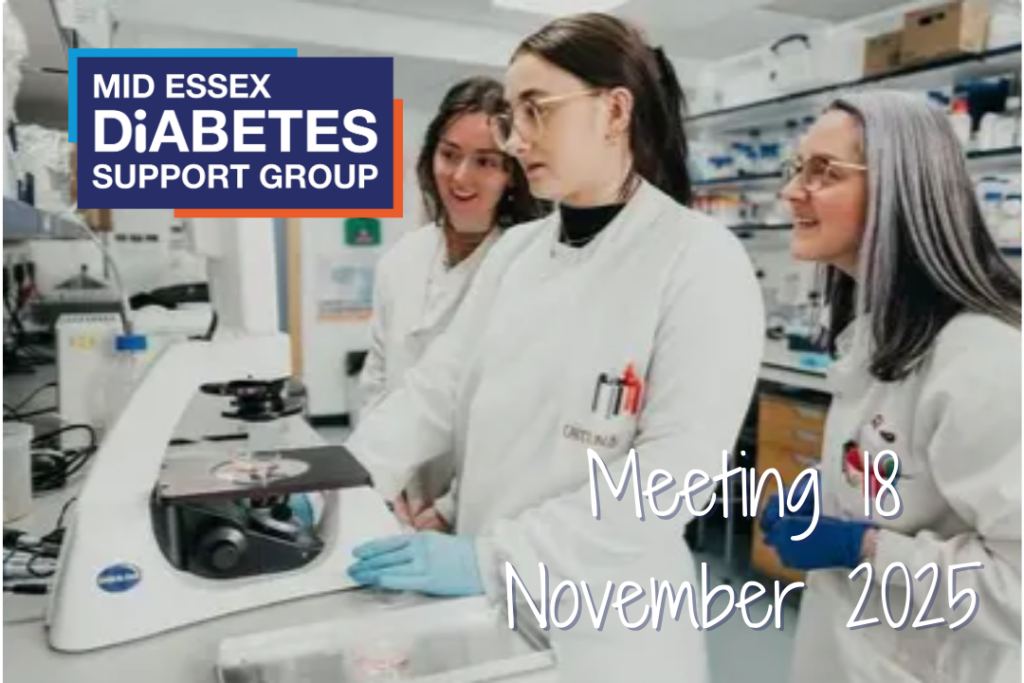
Dr Claire Duff gave our group a presentation on the research project that she is working on. The project is called, Growing Stem Cells into Beta Cells for transplantation. Claire let us know the project is being funded by The Steve Morgan Foundation, Diabetes UK, and Breakthrough T1D. The websites relating to the funding can be found by clicking on the respective links above.
Claire showed us some spreadsheets that set out the details of the items bought and their cost.
Before going ahead to enlighten us on the detail of the project Claire explained that Islets cells are made up of Alpha Cells, which produce glucagon (glucagon raises our sugar level), and Beta Cells, which produce insulin (Insulin lowers blood sugar levels). The Islet cells contain other cells, each having a different function.
There are seven stages in turning a stem cell into a beta cell. Each stage the cells need to be fed and checked daily. It is already known that a stem cell can be turned into a beta cell, however further improvement on the type and quality of food given to the stem cells is needed to ensure a successful transplantation.
At present beta cells that are transplanted have to be accompanied by the giving of immunosuppressants, which in turn present other challenges.
It is hoped that in future stem cells can be harvested from the patient from either a blood sample, a skin sample, or a bone marrow sample. This will negate the need for taking immunosuppressants.
Project summary (the data below can also be found by clicking here)
A potential transformative treatment for type 1 diabetes is to replace insulin-making beta cells that have been destroyed with new ones, so that people can make their own insulin again. Professor Shanta Persaud is testing a new and improved method to grow new beta cells in the lab from stem cells. Having an unlimited supply of lab made beta cells would bring us closer to a cure for type 1 diabetes, and this project could see us get there sooner.
Background to research
Type 1 diabetes happens when the body attacks its beta cells in the pancreas, and people can no longer make the insulin they need to live. Transplants of beta cells taken from donor pancreas already exist and can help people with type 1 produce their own insulin again for a short time. But there are a
limited number of donor cells available.
In the quest to create more beta cells and cure type 1 diabetes, scientists have turned to stem cells. Stem cells have the potential to become a wide range of different human cells, and scientists can encourage them to turn into beta cells in the lab.
Currently, lab-made beta cells are not effective enough. This is partly because the methods scientists use to produce them are rooted in what they know from studying mouse stem cells. And human and mouse beta cells develop differently. Professor Shanta Persaud and her team are experts in human beta cell development. They aim to use their knowledge to improve the process of making
beta cells from stem cells.
Research aims
The team will turn human stem cells into beta cells using a new method based on their understanding of how beta cells develop in babies as they grow in the womb.
They’ll then compare the cells they’ve made with real human beta cells from donors to see how similar they are. Finally, they’ll transplant the beta cells they’ve made in the lab or beta cells taken from donors into mice with diabetes. They’ll check if their lab-made cells are better at managing blood sugar levels.
Potential benefit to people with diabetes
Currently, insulin is the sole therapy for type 1 diabetes. But it’s difficult to use and doesn’t come close to giving the precise blood sugar control that beta cells do. If successful, this study would give scientists a method to create better-performing beta cells from stem cells. This could speed up progress towards clinical trials of beta cell transplants in people with type 1 and move us closer to a cure. Beta cell transplants would be game-changing and could give people a future without the
relentlessness of managing type 1 diabetes and the risk of serious complications.